If there's one point I've tried to drive home with newer freelance writers over the years, it's that specialization is one of the best things you can do to increase your freelance writing income. That might mean specializing in a niche, an industry, or even a type of writing.
Rather than go on about the benefits of specialization yet again though, I wanted to do something different. So today kicks off a new series which will cross between the blog and podcast -- one where I'll chat with or interview guests about their own freelance writing specialties, how they chose them, and how it's working out for them.
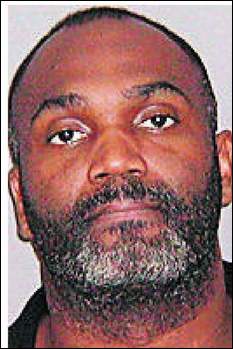
The series will feature writers who have worked in their specialty area for years as well as recent generalists-turned-specialists. Today's guest falls in the latter group: Edward Beaman, a building trade copywriter in the UK.
Interview with Edward Beaman, Building Trade Copywriter
 Edward has been freelancing for two years, initially as a generalist. But his previous experience of more than eight years in product sales and affiliate marketing taught him a great deal about content marketing, copywriting, and consumer psychology -- skills he now applies to his freelance writing projects.
In our interview, Edward talks about why he chose his new niche market, why he decided to transition away from a career as a generalist, and what you can do to ease into a specialty without immediately abandoning all your previous marketing work.
You specialize in writing SEO web copy for construction companies and a variety of building contractors. What influenced you to choose that specialty area? For example, you mention on your website that you've always had an interest in architecture. Was that enough on its own to lead you to that decision? Did you have experience working in the construction industry in some capacity before becoming a freelance writer?
The niche chose me and then I ran with it. I began my freelancing career as a generalist writing for anyone who would hire my services. Clients included product designers, fashion stylists, opticians, shipping companies, and printers. But after a while I began to notice a pattern. Half of my clients were from the building trades including builders, electricians and plumbers.
I enjoyed writing copy for their websites and marketing materials. Very quickly I became accustomed to all the various codes, accreditations and technical terms used by these businesses. When a new client in this sector came along I knew the right questions to ask and the exact pages/documents they needed. It was all very smooth and quick. This then gave me the idea to specialise in this industry.
My long-term interest in architecture and design I think certainly played a part. Writing and reading about loft conversions, renovations and house building is not something that’s going to interest people without an architectural inclination.
And no. I’ve no direct ‘hands on’ experience of working in the building and construction industry. This has never been a drawback though.
This is a fairly new specialty for you. What made you decide to switch from being a generalist freelance writer to a specialist in your new niche?
My decision to specialise was based on three things; marketing, money and ease.
Marketing
I’ve been a freelancer for a couple of years and found marketing myself as a generalist a big pain. There are so many copywriters. It’s an ocean out there. I would contact web designers and marketing agencies asking for collaboration opportunities and barely got replies. They are inundated with generalist writer emails.
Plus, I had my writer website to market. When you’re marketing to anyone and everyone, you’re basically marketing into the wind. For a good year I was just going round in circles wondering what to blog about, what to share on social media, who to contact, how to formulate my own service pages etc. etc. It was awful and like being a headless chicken.
I did however manage to connect with three good web designers during this period and that’s where a lot of new clients came from. My email outreach thus managed to find some success but it took a lot of fishing.
Now I have specialised it’s a lot easier. My website is still just a couple of months old so I can’t claim success there yet but with email outreach I’m already seeing the benefits. When I was a generalist, about 1 in 50 of my outreach emails would get a result. Now it’s 1 in 5!
In just two weeks I have nearly two dozen web design agencies who have put me on their files (for when they have a building industry project) and I also have an imminent job about to start.
I’m hoping and expecting this to be the same for my website when it grows.
Money
Specialists make more money, don’t they? As a specialist you can charge higher rates. You become the industry expert and people pay more to work with an expert.
I notice it in my own buying habits. When I come across a specialist in something then I’m more willing to pay a little extra for their services to get the job done well. There is that trust factor.
When you understand an industry and have written for it many times before, you have that confidence. You ask the right questions, you understand the client’s worries and you also have a deeper understanding of the market and what it wants. The client senses this immediately and understands the price isn’t going down.
Ease
This might come across as being a bit lazy but it’s easier when you really focus on one niche area. I know what building contractors need and what plumbers require. I could talk about kitchen installations, disabled bathroom features or electrical rewiring services for hours without needing to look at notes. There’s the hard work of studying all that the first time around of course but then it becomes easier and easier the more you write about them.
Being a generalist means half your time is spent researching new industries. Earlier this year, for example, I had to read about ophthalmoscopes and phoropters for an optician client. Then the next week I was researching information about a dozen different types of barrels and containers for a shipping company.
Phew!
I mean, it was all very interesting. Diversity is great in life but it can get a bit too much sometimes, switching from one topic to another in a completely different field.
So yes, specialising makes things easier and when combined with the financial perks, you can do more in a shorter time frame.
You also market design services by working with third party designers. What role have these third parties played in helping you transition to your new specialty (such as through either referrals or sub-contracting)?
A lot. Two thirds of my work has come via web designers and agencies.
Without this river of clients, I wouldn’t have found the specialism as quickly as I did. Funnily enough though, my very first client, who I cold emailed, was an electrical company. A sign of things to come!
My aim is to continue working via agencies and designers. But I’d like more direct clients as well. This is the goal for my new specialist website. A healthy mix of the two will be ideal.
Has the nature of your new industry specialty also led to a change in geographical targeting at all? In other words, due to issues like building code variances, do you usually stick to local clients around the UK? Or does the copy you tend to write not have to delve into those kinds of issues, where you can work with a broader international client base?
My website and marketing is set up for UK clients. I think business owners generally prefer to work with people in their own country who are familiar with the various rules and regulations, plus the national vernacular. And it’s easier just to pick up the phone when you’re in the same country.
As far as my own preferences go, I don’t really mind where the client is located. It would be fun to work with US clients one day. Codes and regulations are relatively easy to research, albeit time consuming, but that’s fine if you’re going to be working more often with clients from that country.
I’ve written for international clients before in other industries including businesses based in Denmark, Poland and Israel.
What is the biggest challenge you've faced so far (or the biggest challenge you anticipate) during your transition to this new target market? Did you prepare for those kinds of challenges before making the change (and if so, how)?
To be honest I’m not sure what the biggest challenge is yet. There are a number of problems, difficulties and issues that need to be addressed but these are not really that different to marketing any type of freelancing service.
Knowing how best to reach potential clients is something I’m working on. Builders, electricians and plumbers tend to be more hands on and out onsite rather than sat in front of a computer all day, so it’s a bit more difficult to reach them through conventional online marketing.
But I know many do use social media so that’s an avenue I’m working on.
Attracting clients who want to grow and expand their business is important. They understand the value of good copy and so pay accordingly. Smaller businesses who want a web presence just for the sake of having a web presence, like their rivals, tend to want things done on the cheap.
I did quite a bit of research before taking the plunge and creating a building industry website and marketing focus. As well as the clients I’d worked for already, I studied hundreds of building trade websites and marketing pieces (leaflets, brochures, white papers) both in the UK and internationally.
I also followed all the industry news websites and looked at what builders, electricians and plumbers were sharing and talking about on social media, plus what customers were talking about on forums and in review sections like Yelp. A hell of a lot of research basically. All of this was to ensure I didn’t hit any unforeseen challenges that might have scuppered things.
What one piece of advice would you give other generalist freelance writers who want to begin transitioning to a specialty area?
Research.
Don’t rush into a specialism. Take your time writing different types of copy for various industries. Study which projects you enjoyed the most and for whom. Evaluate which customers you managed to help the most. When you gravitate toward a particular industry or writing medium, make sure there’s good earning potential there. Also ensure the industry you choose will be needing lots of copy to be written.
Then follow up this research with more research into your ideal clients. Consider factors such as: how you’ll market your copywriting services to them; where they hang out online and offline; what they will want to know; what their worries and desires are; who they are; and even whether you feel you can connect with them on a personal level.
All these things are more important than you might realise. So yes, research.
Can I add a quick second answer? Keep your generalist website ticking over. You can still work with other types of client. They will provide a little variety when you feel a bit stale in one specialist area. Plus, it’s a good [safety] rope in case the industry or medium you specialise in later falls flat. You never know what’s going to happen a few years down the line.
You can learn more about Edward Beaman at BuildingTradeCopywriter.com (or his generalist freelance writing site, still available at EdwardBeaman.com). You can also find Edward on Twitter, @writerbeaman.
Edward brings up an important point. Specializing as a freelance writer doesn't have to involve a sudden all-or-nothing switch. It's perfectly OK to transition away from a more generalist approach and test new markets before deciding on a specialty. That's especially true if you aren't choosing a specialty because of your own industry experience or credentials but more because it's a niche or industry you simply have a strong interest in.
I highly recommend that all freelance writers check out Edward's website. Take a look at his client-focused blog. It might still be fairly new, but it's one of the best examples of a professional blog I've seen from a freelance writer yet. The content is compelling. And, more importantly, it's extremely well-targeted to his client base. It's a great example to model your own freelance writer blog after (within your own specialty area of course).
Do you have a freelance writing specialty story to share? I'd love to hear about your choice to specialize as a freelance writer, so tell me about your story in the blog comments.
If you have a particularly interesting or unusual specialty (or story about how you got into that niche), you might be a good fit for this interview series. If so, feel free to contact me and let me know if you'd be interested in a blog interview like this one or a chat in the podcast series. Just note that this was planned as a limited series for now, so I'll only be taking on a few additional stories at this time.